
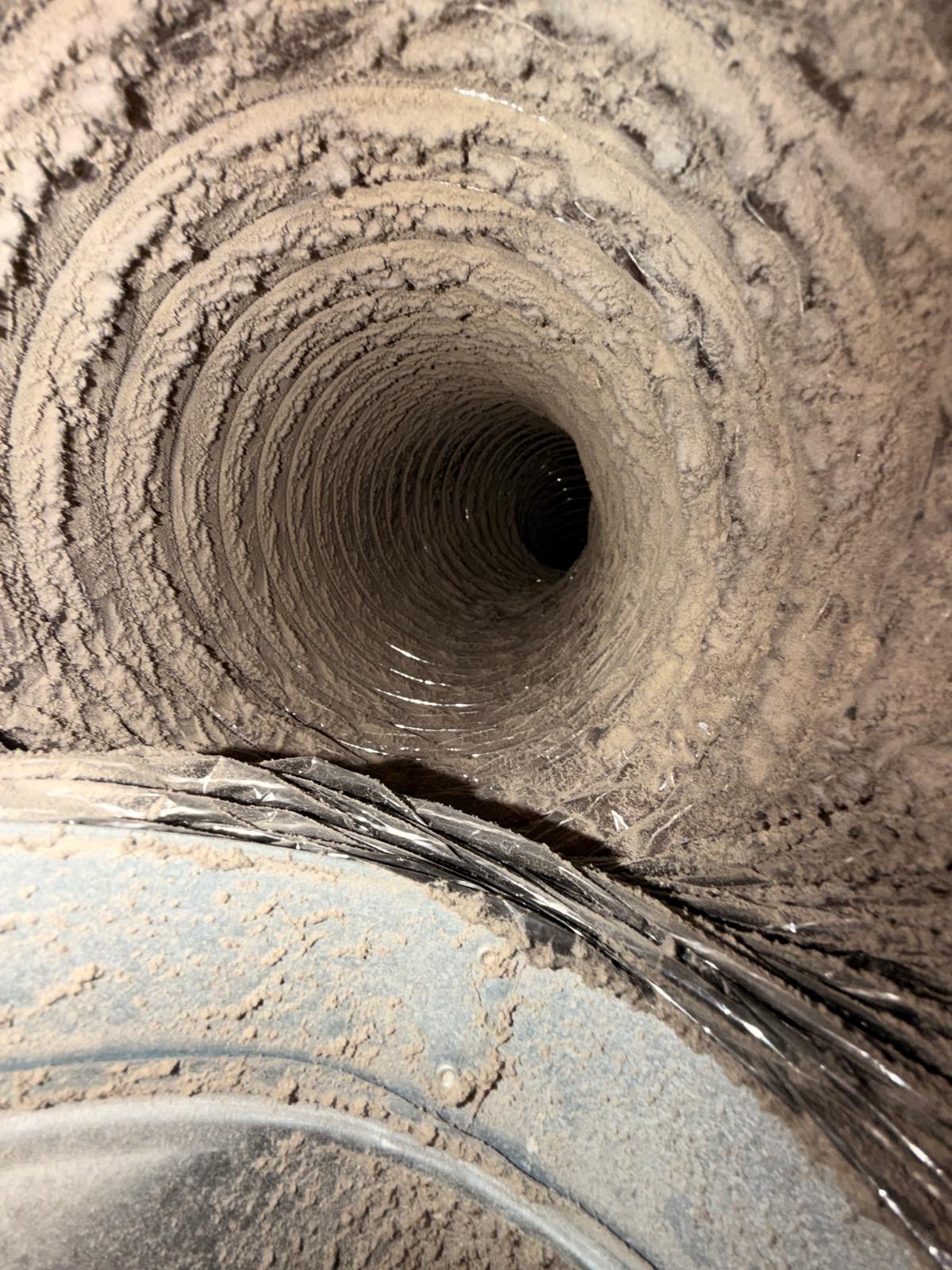
The Fire Risk Hiding Behind Your Dryer
The U.S. Fire Administration reports roughly 2,900 residential dryer fires each year, causing five deaths and over $35 million in property damage. Failure to clean the dryer vent is the leading cause. Lint build-up restricts airflow, forces the dryer's high-temperature limit safety switch to cycle on and off, and — eventually — ignites.
If your dryer is warm to the touch, if it takes two cycles to finish a load, or if you smell anything burning, stop using it and call us.
Our Vent-To-Hood Cleaning Process
We disconnect the dryer, brush out the lint trap housing, run a rotating brush and reverse-airflow system through the full duct length, and clean the exterior vent hood from outside. Then we reconnect, run a test cycle, and confirm airflow with a calibrated anemometer.
If we find a damaged, crushed, or dangerous PVC/vinyl vent hose, we'll quote an on-the-spot replacement to bring your setup up to code.
Why PVC Dryer Venting Is Dangerous
Some older homes across metro Atlanta were built with plastic PVC or thin vinyl dryer venting. Both trap lint, sag over long runs, and melt at temperatures a dryer can easily reach. Georgia code and dryer manufacturers now require rigid or semi-rigid metal ducting for a reason — we'll upgrade it during your service.